

How Automation is Accelerating Drug Discovery Timelines
The discovery of new drugs is vital for improving the lives but can be expensive and time consuming to research, here is how automation is helping to speed up this process.
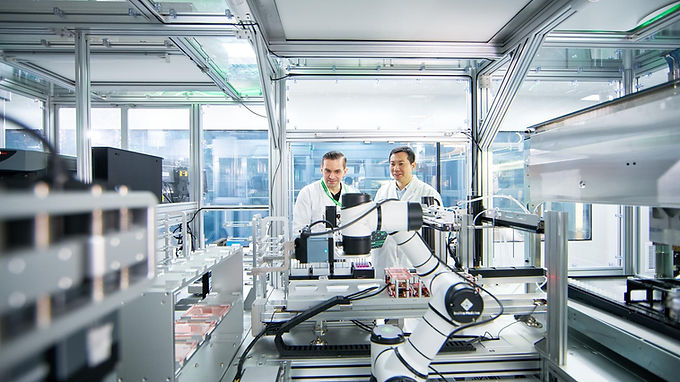
A growing constraint for innovation within the pharmaceutical industry is time. However, what once took years can now take months thanks to automation. Once considered a luxury, laboratory automation and advanced technologies are rapidly becoming essential tools for research organisations looking to accelerate discovery.
Drug discovery laboratories can use either manual or automated methods when conducting experiments. Manual work requires researchers to carry out each step themselves, often involving hours of repetitive pipetting. Automated workflows, on the other hand, utilise technologies such as liquid handling systems, robotics and artificial intelligence (AI) to perform these tasks with greater speed and consistency.
Automated workflows enable laboratories to process far more samples than would ever be possible manually. While throughput varies between instruments, some of the highest-capacity systems can process up to 500,000 samples per day. Having worked in a research laboratory myself, I certainly wouldn't fancy processing that many samples by hand!
Many of the tasks performed by automated systems are repetitive and time-consuming, allowing researchers and scientists to focus on higher-value activities such as data interpretation, experimental design and scientific problem-solving. This not only improves productivity but also helps accelerate the drug discovery process. Automation also delivers exceptional precision. Once programmed, instruments can perform the same task repeatedly with a level of consistency that is difficult to achieve manually.
As much as we'd like to believe otherwise, humans are not perfect. We make mistakes, miscalculate and occasionally misunderstand instructions. Human error is inevitable, particularly when repetitive tasks are involved. Automation helps minimise these errors, reducing the need to repeat experiments and saving valuable time and resources. Unlike people, automated systems can also operate around the clock, dramatically increasing laboratory productivity.
Drug discovery is both time-consuming and expensive, making efficiency critical. AI is increasingly being used to optimise the Design-Make-Test-Analyse (DMTA) cycle, the four-stage framework that underpins modern drug discovery.
The first stage is Design. AI algorithms can predict how potential drug candidates are likely to interact with biological targets before laboratory work even begins. These predictions help researchers prioritise the most promising compounds, reducing unnecessary experimentation and avoiding wasted time and expense. Given that many drug candidates fail long before reaching clinical trials, improving decision-making at this early stage can save millions of pounds in development costs.
The next stage is Make, where compounds are synthesised. Automated workflows significantly increase throughput, enabling laboratories to produce candidate molecules much more quickly. This stage has traditionally been one of the first major bottlenecks in drug discovery, but automation is helping to alleviate this challenge.
Once compounds have been created, they move into the Test phase before the resulting data is Analysed. Here, AI can again play an important role by identifying patterns, interpreting complex datasets and helping researchers make informed decisions about which candidates should progress further.
An emerging development in this space is the Self-Driving Laboratory (SDL). By combining automation with AI, SDLs can explore multiple experimental pathways simultaneously. Machine learning models guide the selection of experiments, interpret results and continuously refine future testing based on previous outcomes.
This systematic approach reduces the number of physical experiments required while significantly increasing the speed at which discoveries can be made. SDLs are particularly valuable in research areas such as pharmaceutical development, where experiments are highly complex, multidimensional and expensive.
Despite their impressive capabilities, SDLs are not replacing scientists. Researchers remain responsible for defining the hypotheses, setting the objectives, establishing constraints and interpreting the broader scientific significance of the results. Rather than replacing scientists, SDLs act as powerful tools that enable them to work more efficiently and make better-informed decisions.
Ultimately, the goal of drug discovery is to develop medicines that improve and save lives. For patients living with serious or debilitating conditions, every day matters. By accelerating research through automation and AI, promising treatments can reach the market faster, giving patients earlier access to potentially life-changing therapies.
Thanks to automation, we no longer need to walk the path to drug discovery—we can run it.
