

Fuse Diagnostics raises £1m to scale rapid molecular testing platform
Cambridge-based diagnostics company Fuse Diagnostics has secured £1 million in new funding to accelerate the commercialisation of its rapid, instrument-free molecular testing platform and expand manufacturing capacity in the UK.
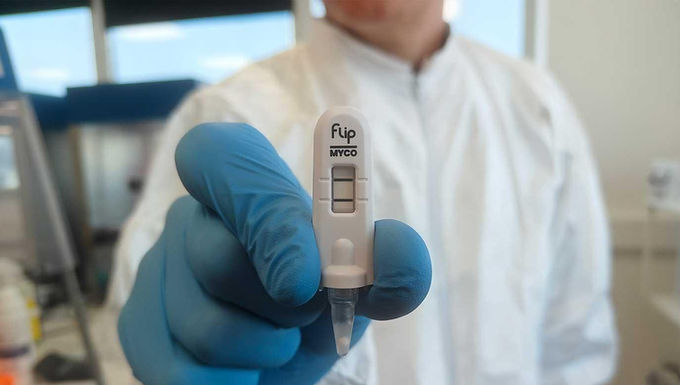
The investment, led by The FSE Group alongside existing and new angel investors including Cambridge Capital Group, will support the development and commercial rollout of Fuse’s proprietary Flip™ platform.
The company is targeting applications across six markets where rapid, reliable testing can be critical but access to specialist laboratory infrastructure is often limited: life sciences research, bioprocessing, food safety, water quality, veterinary diagnostics and plant agriculture.
Fuse’s approach is centred on bringing laboratory-quality molecular diagnostics closer to the point where testing is actually needed. Its Flip platform combines proprietary amplification technology with a low-cost disposable test format, removing the need for a conventional laboratory instrument.
The company says this could help address some of the practical limitations of centralised molecular testing, where samples may need to be transported to specialist facilities and results can take significantly longer to obtain.
From specialist laboratories to point-of-need testing
Molecular diagnostics such as PCR have become fundamental to detecting pathogens and contaminants, but their use has traditionally depended on specialist equipment, trained personnel and laboratory infrastructure.
Fuse is developing its platform around a different model: enabling molecular testing to take place directly at the point of need.
Its first product, Flip Mycoplasma, is designed to detect mycoplasma contamination in cell cultures and delivers results in around 12 minutes, according to the company. Fuse is also developing a wider pipeline of proprietary assays, alongside Flip LAMP, which allows researchers to run custom or published LAMP assays using the platform.
The technology has applications beyond conventional clinical diagnostics. In bioprocessing and life sciences research, for example, rapid detection of contamination could help researchers and manufacturers identify problems earlier, potentially reducing disruption to biological processes and products.
Similar requirements exist in areas such as food production, water monitoring, agriculture and veterinary testing, where the ability to test samples onsite could provide practical advantages over sending them to central laboratories.
Funding to support commercialisation
The £1 million financing will be used to move Fuse further along the commercialisation pathway, with investment planned across assay development, validation with strategic industry partners, manufacturing scale-up and commercial expansion.
For the Cambridge company, the fundraise represents a transition from technology development towards broader market adoption.
“This funding marks an important step in commercialising our Flip product platform and validating new assays with strategic partners across sectors where rapid, decentralised testing can make a meaningful difference,” said Dr Harry Lamble, CEO of Fuse Diagnostics.
“Built on years of scientific and engineering development, Flip is designed to give researchers faster, simpler tools for detecting pathogens and contaminants, helping to prevent disease and protect products, biological processes and the environment.”
The company was founded by brothers Harry and Ralph Lamble, who previously founded Sense Biodetection. At Sense, the pair developed Veros COVID-19, described by Fuse as the world’s first rapid, instrument-free molecular diagnostic test. Sense was acquired by Sherlock Biosciences in 2023.
Fuse is now applying that experience to a broader set of industrial and life-science applications, where the need for rapid pathogen and contaminant testing extends well beyond healthcare.
Building a decentralised diagnostics market
The investment also reflects growing interest in molecular testing technologies that can operate outside conventional laboratory environments.
For Fuse, the objective is not simply to make existing laboratory testing smaller or faster, but to develop a platform that can support a wide range of assays in locations where conventional infrastructure may not be available or practical.
Cheryl Weeks, Head of Funds South East & East at The FSE Group, said the company’s combination of shared technology, manufacturing and commercial infrastructure across multiple sectors could create opportunities for global partnerships.
With the new funding, Fuse will focus on expanding its Flip portfolio and working with industry partners to validate additional applications, while scaling its Cambridge-based manufacturing capabilities.
The company’s longer-term ambition is to make rapid, laboratory-quality molecular diagnostics accessible wherever testing is needed, from research laboratories and bioprocessing facilities to farms, food production sites and environmental monitoring locations.

Author
BioFocus Newsroom